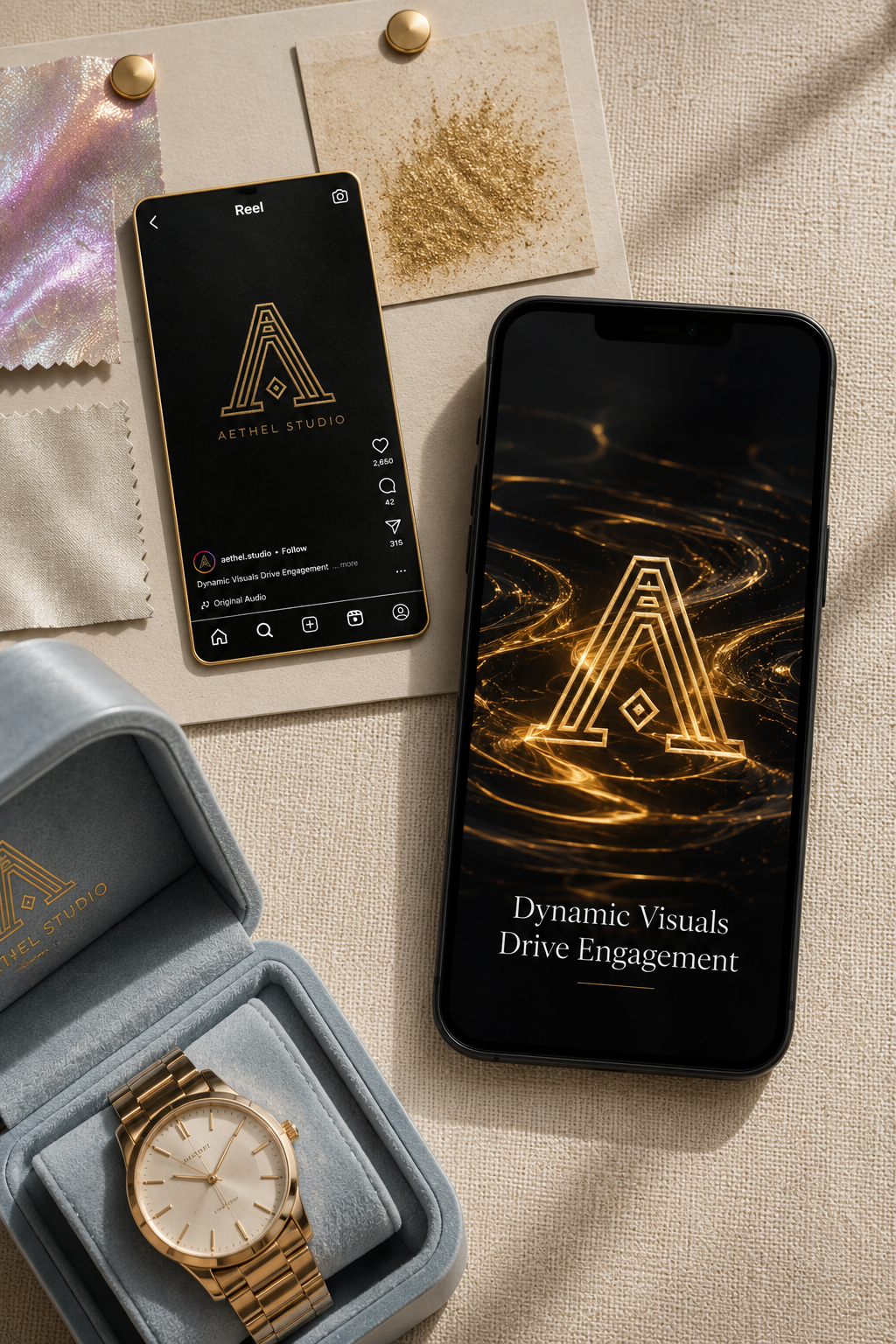
Static imagery no longer holds the attention of discerning audiences. Discover why motion, depth, and coherent visual storytelling are now essential tools for luxury brands seeking to captivate high-value clients.
The Attention Economy Has Changed
In a digital landscape saturated with imagery, the static photograph has quietly lost its power to command attention. Every feed, every platform, every scroll is now a competition for a fraction of a second of focus. For premium brands, the challenge is no longer simply being seen — it is being remembered long enough to matter.
This shift did not happen overnight, but it accelerated as consumer expectations rose across every category, luxury included. Audiences accustomed to fluid, responsive digital experiences elsewhere now expect the same from the brands they follow. A flat product photo, however beautifully lit, reads as static in an environment built around motion. Subtle animation, dimensional depth, and considered visual rhythm now do what a still image cannot: they invite the eye to linger, and the mind to engage.
What Dynamic Visual Assets Actually Look Like
This is where dynamic visual assets — gentle animations, refined 3D mockups, cinematic product reveals — distinguish themselves from the conventional content flooding every feed. They do not shout for attention; they draw it in, mirroring the quiet confidence that defines luxury branding itself.
A product that rotates with mechanical precision. A logo that resolves gradually, with intention, rather than appearing all at once. A texture — leather, brushed metal, silk — that catches and releases light as it moves. These details signal craftsmanship long before a single word is read, and they do so in the first 2-3 seconds of a viewer's attention, which is often all a brand gets. Increasingly, this precision is being achieved with the help of AI-driven visual tools, which allow brands to generate and refine these subtle effects with far greater speed than traditional production alone.
Importantly, dynamic does not mean loud. The most effective luxury motion content is often the most restrained: a near-imperceptible parallax, a slow dissolve between two states of a product, a soft camera drift across a scene. Restraint, rendered in motion, still reads as luxury. Chaos, however well-produced, does not.
Why This Matters Strategically, Not Just Aesthetically
For brands courting sophisticated, high-value clientele, this shift is not aesthetic indulgence — it is strategic necessity. Platform algorithms increasingly favor content that holds attention longer, which means motion-based assets are not just more memorable; they are structurally rewarded with greater reach. A brand that continues to rely exclusively on static imagery is, in effect, competing with one hand behind its back.
Coherent, moving visual identities also build a sense of anticipation and trust across every touchpoint — website, social feed, email, pitch deck — transforming passive scrollers into engaged, discerning audiences who feel the difference before they can articulate it. Over time, this consistency becomes a signature: audiences begin to recognize a brand not just by its logo, but by the particular quality of movement and light in everything it produces.
Getting Started Without Overhauling Everything
Brands new to this approach do not need to rebuild their entire visual library overnight. The highest-return starting point is usually the handful of assets that appear most often across touchpoints — a hero product shot, a primary logo mark, a signature packaging shot — converted into subtle motion pieces that can be reused across the website, social platforms, and paid campaigns alike. If you're unsure whether your current visual identity can support this shift, it's worth first asking whether your brand shows signs it needs a stronger foundation.
The brands that move first on this front are not simply keeping up with a trend. They are setting the visual expectation that competitors will eventually be measured against.